ReWild Memphis
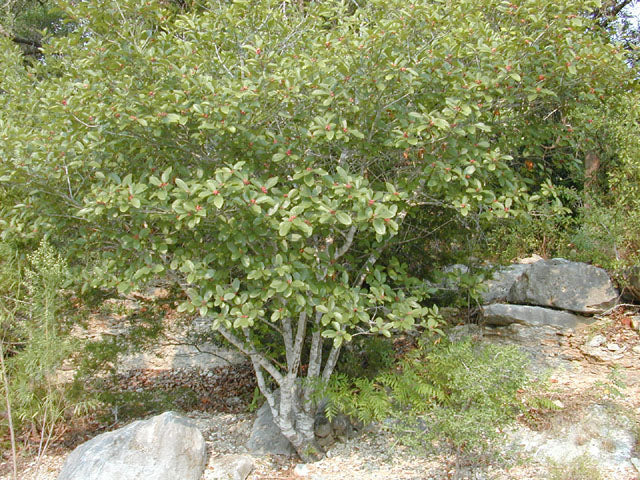
Carolina Buckthorn - Frangula caroliniana
Carolina Buckthorn - Frangula caroliniana
Couldn't load pickup availability
Category: Shrub,Tree
Common Name: Carolina Buckthorn
Scientific Name: Frangula caroliniana
Sun Conditions:Full Sun/Partial Shade
Soil Conditions: Moist, calcareous, rocky soils; adaptable
Height Range: 12-15 ft (to 30-40 ft in shade)
Width Range: 10-20 ft
Growth Habit: Sparsely branched shrub or small tree; no thorns
Growth Rate: Moderate
Bloom Color: Greenish-yellow to white
Bloom Time: April-June
Seed/Fruit Production: Red drupe ripening to black, Aug-Oct
Foliage Color: Glossy dark green; yellow to orange-red in fall
Hardiness Zones: 5 to 9
Evergreen: No (deciduous; leaves stay glossy and turn yellow in fall)
Deer Resistant: No — deer browse the leaves and bark (Lady Bird Johnson Wildflower Center: Deer Resistant = No); protect young plants
Forage: Leaves and bark browsed by deer; ripe berries eaten by many birds and some mammals
Poisonous: Mild — NC State rates it "low severity" poison. Immature fruit contains laxative anthraquinones and some people have had severe GI distress after eating berries; ingestion not recommended.
Wildlife Value Highlights: Understory/woodland-edge plantings, hedge or screen, naturalized thickets, pollinator gardens, specimen. Thornless (unlike common buckthorn). Do NOT confuse with invasive glossy buckthorn (Frangula alnus) or common buckthorn (Rhamnus cathartica) when buying.
Ecological/Landscape Use: Bright red-to-black berries eaten by many birds and mammals (an early color show that attracts fruit-eating birds); flowers attract bees, butterflies and other pollinators; larval host of the American Snout butterfly
Lepidoptera Supported by Family/Group: Up to 11 Lepidoptera species including the, American Snout butterfly
Lepidoptera Supported by Species: 11
For More Info: https://plants.ces.ncsu.edu/plants/frangula-caroliniana/